
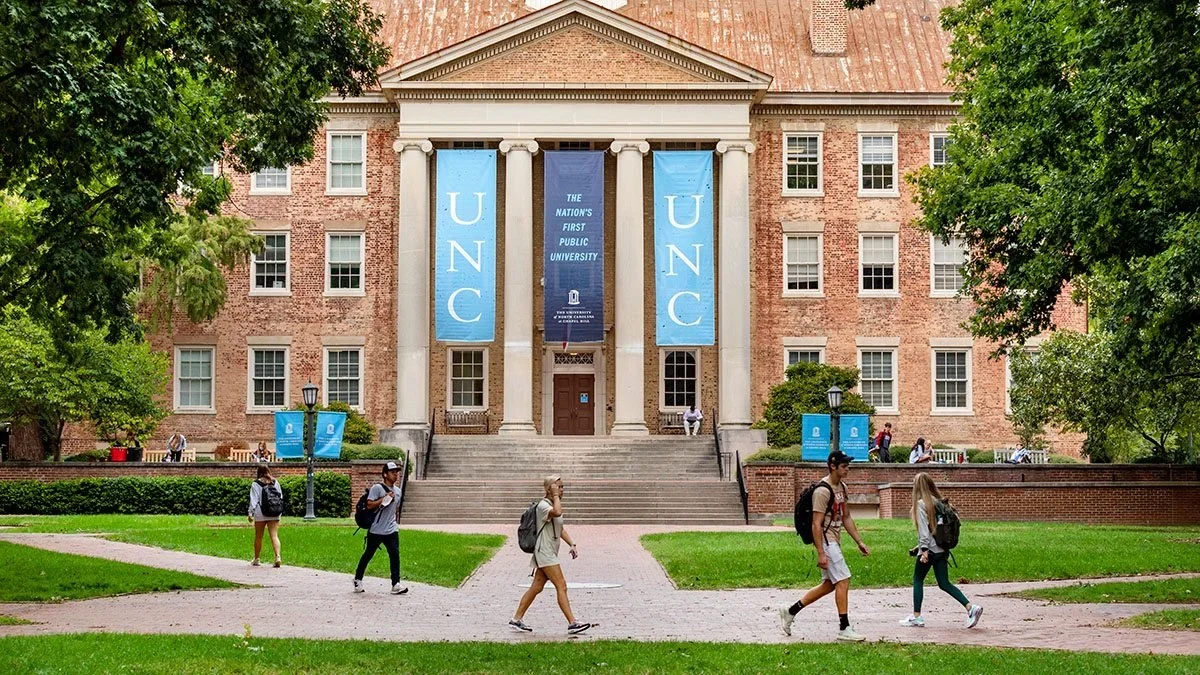
University of North Carolina at Chapel HillU.N.C.
Hailey’s doctoral research—affectionately referred to as The Waffle House Project—examines how everyday environments become sites where broader economic and cultural systems are experienced, sustained, and transformed through time.
Through oral history, cultural analysis, and theoretical inquiry, she studies how labor choreographies become embedded in everyday environments in ways that shape how we understand and take responsibility for the world.
Research StatementAs a doctoral student at the University of North Carolina at Chapel Hill, Hailey’s research examines how cultural norms come to function as social technologies that organize human behavior, shape perception, and sustain economic systems through time.
Situated at the intersection of media studies, cultural theory, and labor history, she uses conversation and dialogue to investigate how labor appears—or is rendered invisible—in everyday practice, symbolic representations, and institutional infrastructures. Centered on the U.S. South, Hailey’s dissertation combines oral history and cultural analysis to explore how “Southern hospitality” operates as an embodied moral framework capable of structuring social and economic life. Rather than treating hospitality as a personality trait, she approaches it as an embodied social choreography that operates at the local level to produce connection and obscure exploitation. Through this lens, she examines how social distance is managed, and how care, deference, and appearance can stabilize unequal labor relations that maintain appearances of a coherent moral order.
Empirically, Hailey’s research draws on oral histories with workers in the food service and automotive industries to understand how certain places become culturally significant sites of Southern life. These narratives are complemented by analyses of media representations, historical texts, and everyday artifacts that shape public understanding of what labor is, and who is responsible for it. These materials illuminate how labor is not only performed but interpreted—how its value is constructed through systems of recognition, perception, and narrative.
Her work is informed by the theory of scholars such as Hannah Arendt, Walter Benjamin, Marshall McLuhan, and Brittney Cooper, whose theory and philosophy comprise the foundation for understanding the material, political, and existential dimensions of human activity. She extends their frameworks by examining how these categories are lived and negotiated within contemporary economic conditions, particularly in regions where historical legacies of racial capitalism and gendered labor exploitation remain deeply embedded.
Across her research, Hailey is particularly interested in how bodies are read and evaluated within institutions and established systems of value. She examines how appearance, comportment, and affect become criteria for judgments of belonging, credibility, and worth. This focus reflects a broader concern with the relationship between material conditions and cultural meaning: specifically, how systems of production rely not only on physical labor, but also on the ongoing work of interpretation that makes those systems appear natural, inevitable, or morally justified.
Ultimately, Hailey’s work aims to bridge academic research, embodied practice, and public discourse. By combining rigorous theoretical inquiry with accessible narrative forms, she contributes to deeper understandings of labor as a lived, relational, and culturally mediated experience. The aim of her work is to open new possibilities for how it might be recognized and valued in the future.